
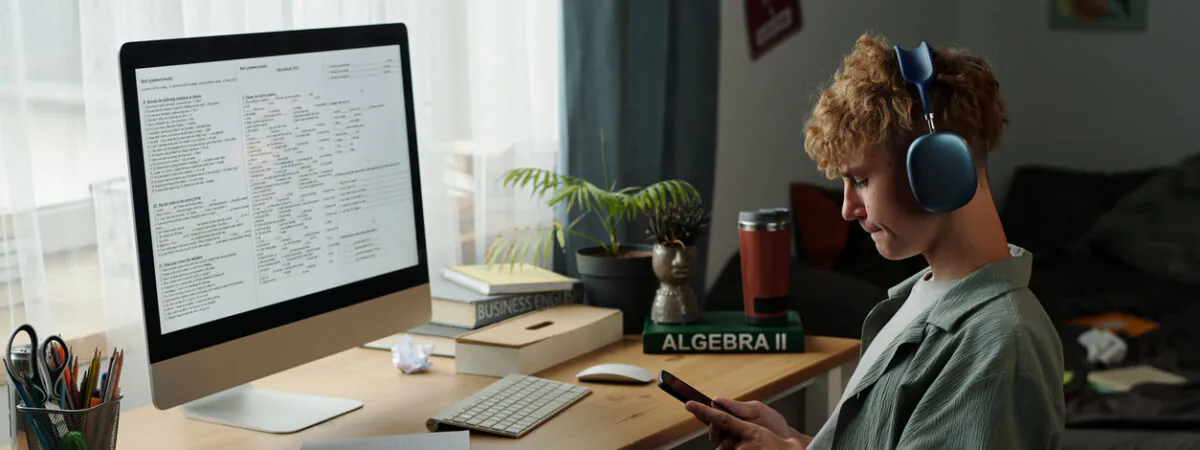
“Have you started your homework yet?”
“In a minute.”
If that conversation happens regularly in your home, you’re certainly not alone. Procrastination is incredibly common among students, particularly when homework or exam revision feels difficult to tackle.
It can be tempting to see procrastination as laziness or a lack of motivation. However, repeatedly putting work off often has much more to do with feeling overwhelmed or unsure where to begin. Understanding what’s really behind procrastination can make it much easier to help your child manage it.
Why Do Students Procrastinate?
Students procrastinate for many different reasons. A task may feel too big, too boring or too difficult. Some students worry they won’t do well, so avoiding the task temporarily feels easier than confronting the possibility of getting something wrong. Others simply struggle to get started.
This can be particularly relevant for students with ADHD. Challenges with executive functioning can affect planning, organisation, time management and the ability to move from intending to do something to actually beginning it. Our guide to positive learning strategies for students with ADHD has more advice for helping students develop study habits that work for them.
Whatever the cause, repeatedly telling a student to “just get on with it” rarely solves the underlying problem.
Make the First Step Smaller
A student faced with “write history essay” has a lot to process. Where should they start? How much should they write? What information do they need?
Instead, break the work into much smaller actions:
- Open the assignment instructions.
- Read the question.
- Write three ideas.
- Find two useful sources.
- Draft the first paragraph.
Completing one small action creates momentum. Once a student has started, continuing often feels far easier.
Create a Routine Around Schoolwork
Relying on motivation alone is difficult because motivation naturally changes from day to day. A predictable routine removes some of the decision-making involved in getting started.
That might mean having a snack after school, taking 30 minutes to relax, and beginning homework at roughly the same time each evening.
Our guide to evening routines that help students wake up ready to learn explains how predictable habits can make school days feel more manageable.
The routine doesn’t need to be rigid. What matters is creating a pattern your child can realistically maintain.
Reduce the Barriers to Getting Started
Sometimes the environment itself encourages procrastination. Phones, notifications, gaming, television and even a cluttered desk can quickly pull attention elsewhere.
Creating a dedicated place for homework can help signal that it’s time to focus. Keep essential materials nearby and, where possible, move distracting devices away during short periods of concentrated work. Our advice on creating an effective study space at home offers more practical ideas for reducing distractions.
Focus on Progress Rather Than Perfection
Perfectionism can be surprisingly good at creating procrastination. Students who believe work needs to be excellent immediately may avoid starting altogether.
Encourage your child to produce something first and improve it afterwards. A rough paragraph can be edited. A blank page cannot.
It also helps to recognise effort, organisation and consistency rather than focusing entirely on grades. Learning to begin difficult tasks and keep going is an important skill in its own right.
Help Students Find Strategies That Work for Them
There’s no single solution to procrastination because every student faces different barriers. The goal isn’t to eliminate procrastination, but to help students recognise when it’s happening and develop strategies to move forward.
A personalised tutor can help identify what’s getting in the way, break overwhelming work into manageable steps and introduce study routines suited to the individual student.
If procrastination is making schoolwork a constant struggle at home, find your nearest Tutor Doctor location to discover how one-to-one tutoring can help your child build confidence, organisation skills and more independent learning habits.


